
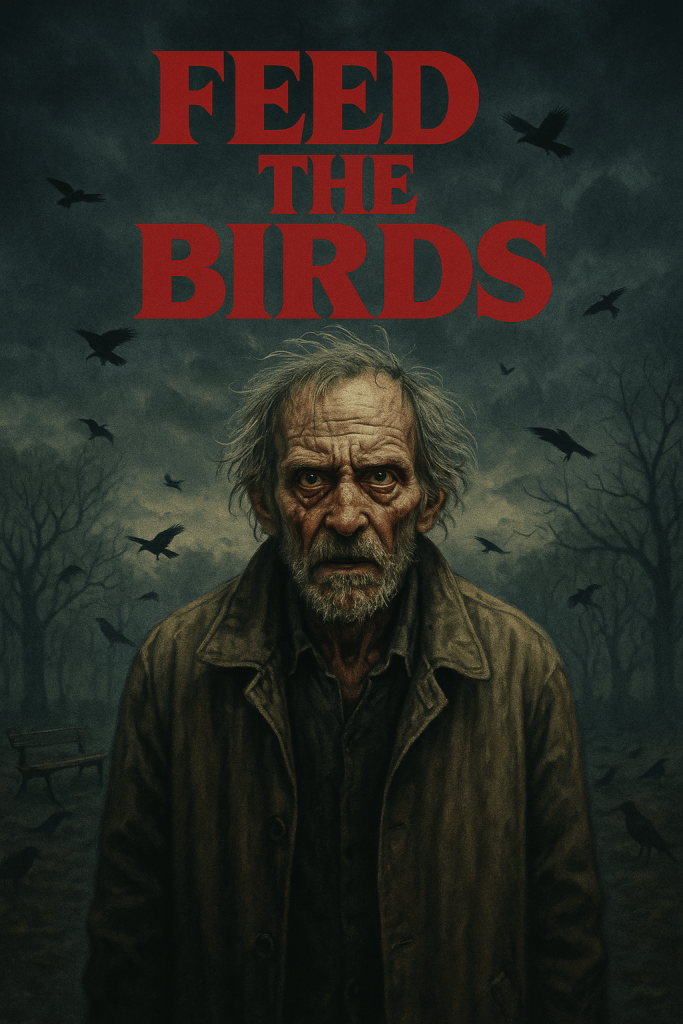
It was another gray, dreary day as Adam trudged to the park, shoulders hunched like he was bracing for another disappointment. He dropped onto his usual bench with a sigh—one of many that had become the soundtrack of his life. Everything about his existence felt misaligned, as if he’d taken a wrong turn years ago and never found the way back. He loathed his dead-end accounting job, a role he’d accepted not out of passion but out of obligation—to placate his father. That decision had grown into a constant ache, gnawing at the edges of his soul. Even with his father gone, Adam still felt bound by the need to appease him—a curse he couldn’t shake. With another sigh, he unwrapped his sandwich, bought from the pretty girl at the bakery. He never managed more than a few mumbled words with her. He didn’t even know her name. Every time he considered saying more, a wave of self-doubt shut him down. What if she laughed? What if she pitied him? Pathetic, he thought, biting into the bread, eyes scanning the park. Normally, the greenery gave him a moment’s peace, a small pocket of calm in an otherwise chaotic life. Today, though, the trees looked skeletal, the grass lifeless beneath a sky choked with bruised clouds. Even the air felt still, like the calm before something terrible. It was as if the world held its breath, waiting for some unseen horror to emerge. He felt like he was on the edge of a breakdown.
As Adam slowly chewed his sandwich, a chorus of cawing began to rise around him. He paused mid-bite, glancing up to see ravens and crows gathering on the nearby branches and grass, their black feathers stark against the ashen world. They weren’t aggressive—just watchful. Curious. He found himself strangely amused, though the amusement had a bitter edge. “Must be nice,” he murmured—“no job, no expectations, just wings and sky.” As if flight alone could make everything better. But even freedom, he suspected, wouldn’t be enough to lift the weight inside him, the leaden sense of failure lodged deep in his chest. However, he envied the feathered beasts for their simple, untethered life. But even that envy curdled quickly into self-disgust. He was now comparing himself to birds. Pathetic. Pull yourself together, Adam, he thought, the command laced with the sharp, disapproving edge of his father’s voice. But another voice rose in quiet defiance—his own, asking why he should keep listening to a man who was no longer alive, whose approval never came when it mattered most. That voice always stirred a tangle of emotions—guilt, inadequacy, a bitter ache that never quite dulled. He remembered the night he’d come home with a poetry prize from school, beaming, only to be met with his father’s dismissive grunt: ‘As if that will pay the bills,’ followed by a hollow chuckle. The sting of that moment never left him. That ghost still lived in his head, scolding, disappointed, always so very disappointed. He took another bite, chewing slowly, while the crows stared with their glinting, ink-black eyes. They neither moved nor made a sound—no squawk, no scatter. Just silent, unblinking observation. Something about their stare began to change in his mind—they no longer looked like birds, but twisted reflections of something deeper, darker. Their shapes seemed to shimmer at the edges, as though reality itself was unsure of them. The air thickened, the cawing now distant, warped, like a memory submerged in water. Adam blinked, but the distortion remained. Their gazes felt intelligent, ancient, knowing. Adam watched back, a chill prickling down his spine. The absurdity of it hit him—this awkward staring contest with the birds, their beady eyes seeming to weigh his soul, judging or perhaps silently sympathizing with his collapse. They felt less like animals and more like silent jurors to a life quietly slipping out of control, deliberating on a verdict he already knew. Guilty—not of a crime, but of surrendering dreams for safety, of silencing his passion to fit into a mold that never suited him, of choosing fear over possibility again and again. A mirthless chuckle escaped his lips, then quickly died. His shoulders sagged, a sudden weariness overtaking him as the thought struck: This? This is the highlight of my day? He shivered, not from cold, but from something heavier—recognition.
He closed his eyes, trying to block it all out—the birds, the thoughts, the weight of everything pressing down on him. Just breathe, he told himself. Focus on the moment, he told himself, drawing in a slow breath. But the air felt thick, like it was pressing back against him, offering no comfort at all. A sound, low and erratic, slithered into his awareness from the right—like a dragging foot or the rasp of fabric over stone. At first, Adam didn’t move. Maybe it was just a squirrel. He clung to that thought, fingers tightening unconsciously on the bench’s worn edge. Then, the sound came again. Closer. Wet somehow, irregular. Against his better judgment, he opened his eyes and turned his head.
A man stood at the edge of the clearing—if it could be called that. He was wrapped in layers of gray cloth, the kind that had long forgotten cleanliness. His hair sprouted from his scalp like weeds from cracked concrete, and his long coat hung off him like a shroud. But it was the twitching that unsettled Adam most. The man’s head jerked periodically, one shoulder rising at odd intervals, as if pulled by invisible strings. He shuffled forward, one foot scraping, then pausing, then scraping again. But his face was the most discomforting. The old man wore a smile that twisted unnaturally across his weathered features—not warm, not benign, but a warped grin that spoke of something dark and unspoken. It was the kind of smile that made your instincts scream, that suggested the man saw something you didn’t—and that it terrified him.
And then, the whisper: “Feed… the birds.”
Adam stared, frozen, the whisper coiling around his mind like smoke. The man didn’t stop. He kept advancing with a slow, erratic gait, muttering the same diabolical phrase—“Feed… the birds”—like a litany, a curse, a warning. Every time he heard the sentence, Adam felt it pierce him like an icy blade—sharp, sudden, leaving a hollow ache in its wake. His heart pounded louder with each step the old man took. He rose from the bench, unsure whether to speak or flee. “Hey,” he called out, voice cracking, “Are you okay? Do you need any help?” The man didn’t answer. He merely paused, and tilted his head at a grotesque angle, pointing a crooked finger directly at Adam. His eyes, glassy and too wide, locked onto Adam’s with a feverish intensity. “Feed. The. Birds,” he croaked, louder this time, the words scraping out of his throat like rusted nails on stone. Panic surged through Adam, his limbs tensed and ready to run. He was terrified of this odd man, wondering if he was being evaluated as some sacrifice—his very breath, his hesitation, his mere presence being weighed by this mad priest of feathered gods. There was something ritualistic in the man’s cadence, something ceremonial in the way he pointed to whatever deity this man worshipped.
Adam took a step back, then another. The birds remained still, yet their eyes seemed to follow him, locked on his movements as if judging his retreat. Or maybe it was just his paranoia whispering doom—or worse, maybe the birds were truly waiting, calculating, ready to descend when fear hit its peak. The man, still muttering, extended his arm further, the pointing finger trembling as if under immense effort—whether from physical weakness, a psychic force, or something more sinister, Adam couldn’t tell. His breath caught in his throat. A metallic tang laced the air now, thick and unnatural, making each breath feel like swallowing rusted fog. A gust of wind suddenly swept through the clearing, rustling the trees. Yet the birds were left undisturbed—not a single feather shifted. That unnatural stillness struck him. Harder than any scream. He turned and ran. He ran with everything he had, as if the act of moving might free him from whatever malevolence had steeped itself into the soil, the trees, the very air—an ancient evil that seemed to pulse beneath the surface of the park. But the whisper clung to him, riding the wind, echoing off the bark and bone of the park—trees groaned like old ribs shifting in the dark, and beneath the soil, he imagined marrow stirring, ancient and awake. The park didn’t want him to leave. Not ever.
“Feed the birds.”
As he ran, every path he took seemed to twist into itself, winding toward dense bushes, rusted fences, or pools of shadow that swallowed the light. Benches, lampposts, even the path markers he was sure he’d seen before—gone. As if the park had erased them behind him, folding reality inward. The trees leaned closer, their limbs creaking above him like old hinges, blocking the sky. Vines clawed at his ankles as if to trip him, tangling around his legs until he nearly fell face-first into the dirt. Thorns raked his arms, sharp and deliberate, drawing thin lines of blood that stung in the cold air as he pushed through unfamiliar hedges. Panic clawed up his throat. He tried to retrace his steps, but the paths betrayed him—twisting into spirals or leading him back to the same gnarled tree with its bark split like a wound. Every turn led deeper in. Never out.
Then, through a gap in the brush, a flicker of movement—just a tremble of leaves beyond the green. A distant sound followed, faint and fragile: the far-off hum of traffic, like a lifeline drifting in from another reality. He turned, shoved through the green, and there it was: the park’s edge. A break in the iron fencing. A narrow, overlooked path. He didn’t think twice. He just sprinted through it. He stumbled onto the concrete of the sidewalk like a drowning man breaching the surface. He was almost free. Of the he was sure.
He ran until he reached his apartment building, lungs burning, legs trembling beneath him. He ignored the puzzled glances and quiet questions from passersby, too focused on escape to respond. Streets blurred past, familiar yet alien, as though the world outside the park hadn’t truly existed until now. A strange numbness crept over him—relief tangled with disorientation, as if his mind hadn’t caught up with his body. Every building, every face felt unreal, painted over a stage set he no longer trusted. He burst through the door, stumbled up the stairs, and slammed the apartment door shut behind him. Only then did he allow himself to breathe. He collapsed against the door, chest heaving, the sweat on his skin turning cold. His hands trembled as he reached for the wall to steady himself, as though part of him expected the door to burst open again.
But the silence wasn’t comforting—it felt hollow, staged, as if something waited just beyond the edge of perception. He locked the door, then locked it again, the clack of the deadbolt sharp and final. Then he pressed his back against it, arms splayed wide as though he could somehow bar entry with the strength of his limbs alone. He stayed that way for several seconds, panting, heart hammering against the wood. Slowly, he tilted his head, placing one ear flush against the door, straining to hear anything from the hallway beyond—shuffling, breathing, whispers. But there was nothing. At least nothing from the outside. But from inside the room—a low, raspy voice. The cursed line.
“FEED THE BIRDS”

 Temple of Morrbanesh